
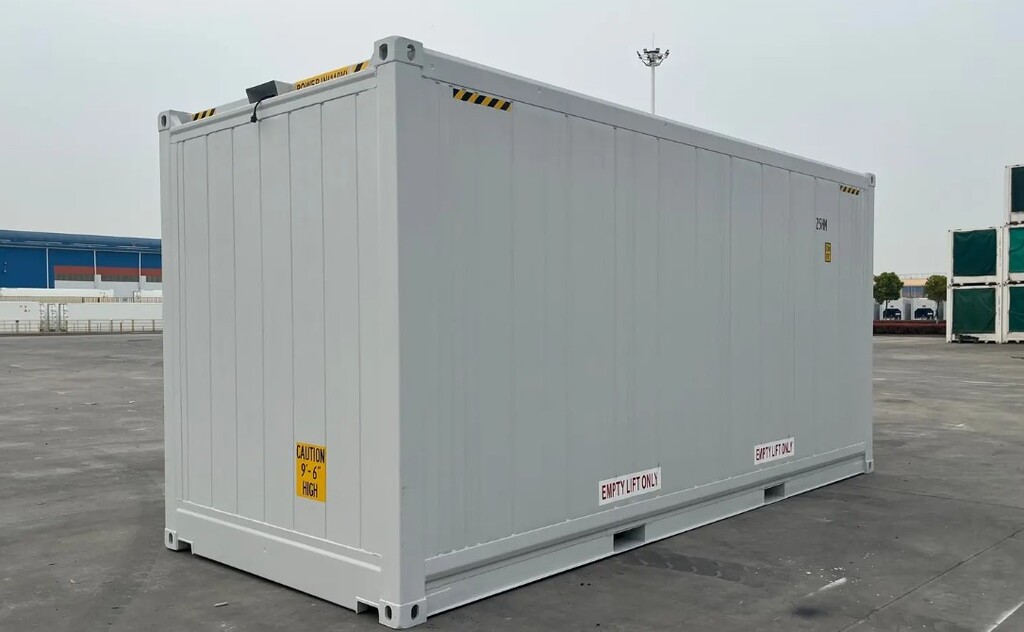
Insulated container size varies depending on its function. Essentially, an insulated container is a non-operational refrigerated container that exists in the middle ground between reefer containers and standard dry containers.
It is widely used for the transport of food, beverages, pharmaceuticals, clothes, furniture, and more. It is used in different sectors when it comes to the transportation of sensitive non-durable goods.
Different types of goods in different industries require different insulated container size. To know which insulated container size is suitable for your needs, read this article!
Contents
What is an Insulated Container?
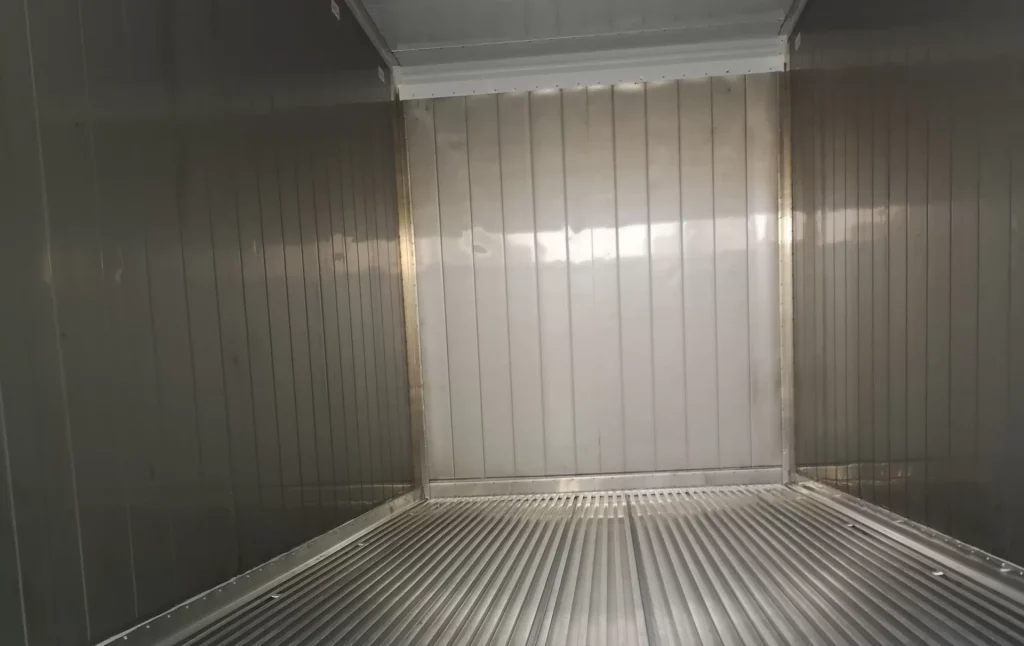
An insulated container is used for goods that don’t require a specific set temperature but do require a maintained ambient temperature. The unit relies on its insulation properties to maintain a steady temperature throughout.
It prevents damage due to temperature fluctuation during hauling. It also minimizes condensation caused by rainwater or moisture finding its way inside the container. This is an advantage if your goods are being shipped a relatively short distance, when no power is available, or when a regular temperature is all that’s required, rather than refrigeration.
The most significant task is to ensure that the cold chain doesn’t break. An insulated container can be used to ship fresh products and keep up their freshness, transport goods without the need for low temperature for a short distance, ensure a standard temperature when no refrigeration is needed, and prevent abrupt temperature changes.
Insulated Container Size
1. 20’ High Cube Insulated Containers
The 20’ high cube insulated container size is best for small to medium shipments, dense cargo, or flexible logistics. This insulated container size is beneficial to use in various industries to transport and store certain goods.
In the food & beverage industry, it is used to transport and store chocolate, cheese, seafood, coffee beans, cocoa, and small cold-chain shipments. In the pharmaceuticals & chemical industry, it is perfect for vaccines, medicines, high-value specialty chemicals, adhesives, and resins requiring temperature stability.
Its compact size makes moving and repositioning easier, which is good for heavy cargo with smaller volume. Here is the size specifications of a 20’ high cube insulated container:
| External Dimension | L 20’ x W 8’ x H 9.6’ |
| Volume | 1.211 cu.ft |
| Tare Weight | 5.950 lbs |
| Max Payload | 61.250 lbs |
| Max Cargo | 67.200 lbs |
2. 40’ High Cube Insulated Containers
If you need a space for your large-scale commercial shipments, the 40’ high cube insulated container size will suit you. With a double 20’ container capacity, this insulated container size is massively used in the food & beverage industry to store and transport bulk milk produce, large amounts of seafood, and beverage exports.
It is also used in the pharmaceutical & chemical industry for the distribution of bulk temperature-sensitive chemicals and international drug transport. Meanwhile, in the agriculture industry, the 40’ high cube insulated container is used to transport and store bulk grain products and large fruit & vegetable exports.
Here are the detailed size specifications of a 40’ high cube insulated container:
| Dimensions | L 40’ x W 8’’ x H 9’6’’ |
| Tare Weight | 9,310 lbs |
| Maximum Gross | 74,960 lbs |
| Net | 65,650 lbs |
3. 45’ High Cube Insulated Containers
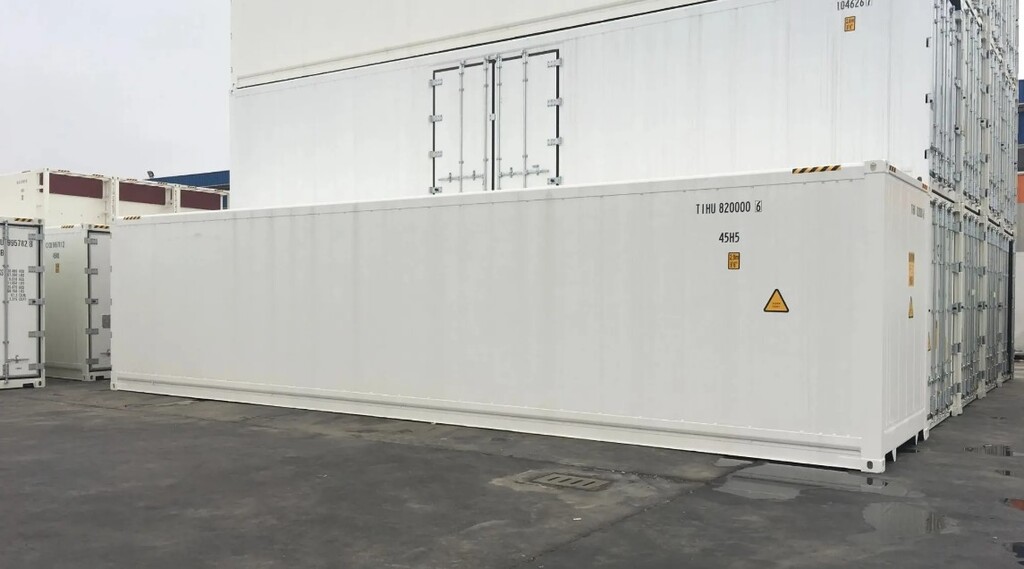
The 45’ high cube insulated is perfect for very high-volume shipments and palletized cargo. Many industries choose this size to maximize pallet capacity and reduce the number of containers per shipment, providing 30% more space than 40’ HC.
They are often used on roads, rail, and sea to facilitate food & beverage export for large-scale food distribution and frozen or chilled palletized goods.
Other than that, you can also use this biggest insulated container size for supermarket supply chains and high-volume consumer goods requiring temperature protection.
Here are the detailed size specifications of a 40’ high cube insulated container:
| Dimensions | L 45’ x W 8’ x H 9.6’ |
| Volume | 86 m³ |
Insulated Container Recommended Units
20′ High Cube Insulated Container
When it comes to controlling temperature fluctuations and preventing condensation due to moisture buildup, insulated shipping containers are the perfect solution. It has similar features to reefer containers but without the refrigeration machine. A fully insulated design also prevents water from entering.
Our 20’ High Cube insulated containers provide optimal protection for a variety of goods, including biomaterials, pharmaceuticals, vaccines, and perishables. They ensure that your valuable items remain in a controlled environment throughout storage and transportation.
The high cube size of this container offers generous space, accommodating taller cargo that may not fit in standard containers. It is the perfect choice for transporting light and voluminous cargo, ensuring your transportation needs are met effectively.
40′ High Cube Insulated Container
Our 40’ High Cube Insulated Container is perfect to store and transport more temperature-sensitive products such as food, beverages, and certain pharmaceutical products over short distances. Made with a High Cube model, this offers you more storage space as it is 1’ higher than a standard container.
This unit can maintain cold or warm temperatures without being affected by the surrounding weather conditions. It comes with a T-Bar floor to allow air circulation to the bottom of the cargo. That way, your cargo will have a relatively stable temperature on all sides.
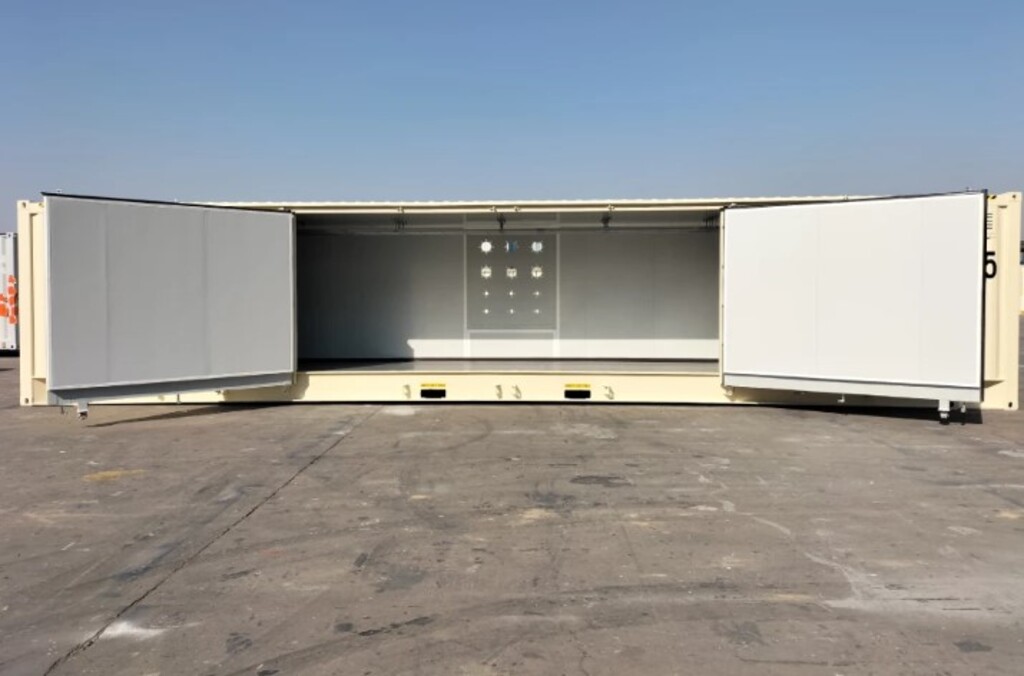
45′ HC SO DD Insulated Container
Tradecorp’s 45’ High Cube Double-Door Insulated Containers are the ultimate solution for businesses or individuals in need of functional and durable storage or workspace. With a 9.6’ height, the high cube design offers plenty of space to store more items or goods.
This innovative product is designed with multiple features to ensure maximum protection and convenience, such as fireproof EPS, custom ventilation, pipe mounting flange, side doors, double doors, and many more.
The side and double-end doors provide multiple entry and exit points, ensuring easy access to stored materials or equipment. This makes it easy to load and unload materials, even if the container is fully loaded.
Insulated vs Refrigerated Container
The difference between insulated and refrigerated containers is simple. A reefer has a motor and needs a power source like a generator on the vessel. An insulated container, on the other hand, is a non-refrigerated container that maintains a steady temperature without an active refrigerating system.
When choosing between the two options, you need to be aware of the shipped goods’ needs. A reefer provides precise temperature control inside the container, while an insulated container just maintains the initial temperature and protects the interior from the exterior conditions.
Reefer containers keep goods cold, frozen, or at a specific temperature during long-distance shipping, while insulated containers are often used in the retail market. Even though the differences seem small, they do significantly change what it’s used for, with some strong reasons and advantages for doing so.
Conclusion
Renting or buying an insulated container can be a smart, flexible, and cost-effective solution for.
Choose Tradecorp as the trusted solution for your insulated container needs.
We also offer various containers, from standard units to modified units, to custom-made containers ready for various uses.
We also provide modification and custom shipping container services by adding windows, doors, walls, and roof insulation.
Our experienced staff is ready to help you arrange the shipping of your insulated container to your requested location. Fill out our quote form to buy or rent from us!