

TL;DR: Trying to choose between a new shipping container and a used one? This guide compares condition grades, pricing factors, storage capacity, and best-fit use cases so you can buy with confidence. You’ll learn how total cost of ownership, delivery, and modifications affect the final decision—and when a 20ft or 40ft high cube makes sense.
- Price basics: shipping container cost used vs new shipping container cost
- Condition grades explained: AS-IS, WWT, Cargo Worthy, One-Trip
- Capacities: cubic feet of storage for 20′, 40′, and 40′ high cube
- When to choose used (budget storage/export CW) vs new (brand image/compliance)
- TCO checklist: doors/gaskets, floors, corrosion, delivery, and mod budget
Thinking about buying a container but not sure whether to go new or used? This guide walks you through prices, condition grades, storage capacity, and use-case fit so you can choose with confidence. We’ll cover the new shipping container advantages, the appeal of used units, how to estimate total cost of ownership, and what to inspect before you commit.
Quick Answer
- Choose used if you want the lowest upfront price for on-site storage, workshop conversions, or short-to-medium term projects.
- Choose new (often called “one-trip”) if appearance, warranty, tight tolerances, and long-horizon deployments matter—especially for retail builds, food/pharma, or brand environments.
New vs Used: What “Condition” Really Means
New (One-Trip) Containers
- Manufactured overseas, loaded once with cargo to reach the U.S., then sold as “new.”
- Benefits: crisp paint, straight panels, tight gaskets, clean marine plywood floors, minimal surface wear.
- Best for: client-facing sites, modifications requiring precise cuts, compliance-sensitive uses.
Used Containers
- Retired from international service; graded from AS-IS to Cargo Worthy or Wind & Water Tight (WWT).
- Benefits: significantly lower price, proven durability, availability in many markets.
- Best for: budget storage, tool cribs, equipment lock-ups, many conversion projects.
Common grades at a glance
- AS-IS: Cheapest; expect cosmetic/mechanical defects.
- WWT (Wind & Water Tight): Verified weatherproof; ideal for general storage.
- Cargo Worthy (CW): Meets survey criteria for export; suited for intermodal use.
Size Options & Cubic Feet of Storage
Most buyers compare 20-foot and 40-foot units. Knowing the cubic feet of storage helps you right-size your purchase.
- 20′ Standard
- Exterior: ~20′ L × 8′ W × 8’6″ H
- Interior volume: ~1,165–1,170 cubic feet of storage
- Good for: small warehouses, remodel staging, equipment lockers.
- 40′ Standard
- Exterior: ~40′ L × 8′ W × 8’6″ H
- Interior volume: ~2,350–2,390 cubic feet of storage
- Good for: inventory overflow, palletized goods, multi-room moves.
- 40′ High Cube (40′ HC)
- Exterior: ~40′ L × 8′ W × 9’6″ H
- Interior volume: ~2,690–2,700 cubic feet of storage
- Good for: racking, tall equipment, mezzanines, more headroom for conversions.
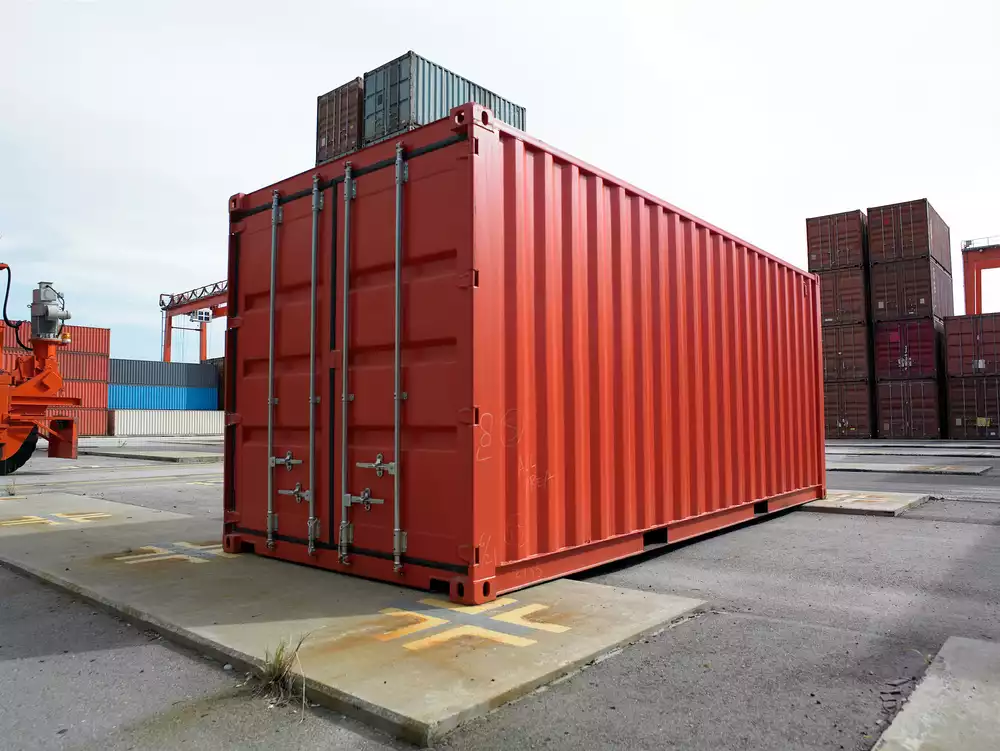
If you need pristine fit and finish out of the gate, a 20ft new shipping container or new 40ft shipping container is often the cleanest path—especially when adding doors, windows, insulation, or branding.
Cost 101: What Drives Price?
Whether you’re browsing shipping containers for sale or planning to buy a shipping container for a multi-site rollout, price swings with:
- Condition & age: New vs WWT vs CW vs AS-IS.
- Size & type: 20′ vs 40′, standard vs high cube, specialty features (e.g., double doors, side doors, reefers).
- Local availability: Port proximity and trucking distance to your site.
- Market cycles: Steel prices, freight demand, and seasonal spikes.
- Modifications: Lockboxes, paint, vents, electrical, insulation, roll-up doors, HVAC.
Pricing Benchmarks (Guidance, Not Quotes)
Every market is different, but here’s how to think about costs:
- Shipping container cost used (general concept):
- How much does a used shipping container cost? Expect meaningful savings vs new—used WWT and CW units are typically the most cost-efficient for storage and many builds.
- New shipping container cost (general concept):
- “New/one-trip” carries a premium for condition, appearance, and longevity.
Because freight and local supply vary, request an all-in quote that separates container price from delivery, and confirm lead times. If you’re comparing a 20ft new shipping container to a WWT 20′, also calculate lifecycle value—paint, patching, gasket replacement, and downtime can erase initial savings if the used unit is very tired.
When New Wins (and Why)
Choose a new shipping container when you need:
- Brand-forward aesthetics: Client entrances, retail façades, showroom pop-ups.
- Compliance or cleanliness: Food-grade prep, pharma staging, strict QA programs.
- Precision mods: Square walls, straight frames, and fresh floors speed fabrication.
- Long-term deployments: Lower maintenance and higher residual value.
A new 40ft shipping container is popular for warehouse overflow and modular facilities where interior height, uniformity, and appearance matter. A 20ft new shipping container is a sweet spot for tight sites, job-site offices, and mobile workshops.
When Used Is the Smart Play
Pick used when your priority is value without sacrificing function:
- Budget storage: Tools, equipment, records, seasonal inventory.
- Rugged conversion shells: Gyms, bike rooms, pump houses, guard shacks.
- Short-to-mid horizon: Projects measured in months/years rather than decades.
- “Good bones” over cosmetics: WWT/CW units protect assets for less.
Pro tip: For storage only, WWT is usually sufficient. For export, look for Cargo Worthy with a current survey.
Total Cost of Ownership (TCO) Checklist
Before you decide, compare apples to apples:
- Structure: Sight down the walls for bowing; inspect corner posts and roof seams.
- Doors & gaskets: Must open/close smoothly and seal tightly.
- Floor condition: Check for delamination, oil saturation, and fastener pull-outs.
- Corrosion: Surface rust is normal; deep pitting isn’t.
- Mod budget: Add realistic costs for paint, vents, power, insulation, and build-outs.
- Delivery math: Line-haul + tilt-bed or crane/rigging if needed.
- Timeline: New inventory often speeds fabrication due to fewer surprises.
Use-Case Guide
On-Site Storage / Warehousing
- Used WWT 20′ or 40′ often wins on value.
- Add lockboxes and vents for security and airflow.
Retail, Hospitality, Events
- New/one-trip 20′ or 40′ HC delivers best appearance and fastest permitting conversations.
- Consider side-open or double-door variants for merchandising and egress.
Modular Offices / Classrooms / Clinics
- New units reduce rework during framing and insulation.
- High cube models create more comfortable ceilings and duct runs.
Export / Intermodal
- Choose Cargo Worthy with survey (or new) to simplify bookings and border checks.
Frequently Asked Questions
How many containers should I compare?
At least three quotes—verify the exact grade, year, photo set, and whether the price includes delivery.
Is high cube worth it?
If you need racking, tall equipment, or a more spacious interior feel, yes. The extra foot of height in a 40′ HC meaningfully increases cubic feet of storage.
Can I finance or rent first?
Many suppliers offer rentals and rent-to-own; it’s a good way to test fit before you finalize specs.
What paperwork matters?
For export: the CSC plate and (for CW units) a recent survey. For new: manufacturer data plate and warranty terms.
Making the Call
- If the question is purely budget—go used WWT for storage or Cargo Worthy for export.
- If the question is longevity, compliance, or brand image—go new.
- In both cases, confirm delivery lead time, crane/tilt requirements, and any site constraints (overhead wires, soft soils, tight turns).
When you’re ready to compare shipping containers for sale, ask for side-by-side quotes: a shipping container cost used option and a new shipping container cost option, both with photos, grades, and delivery. Whether your next move is a 20ft new shipping container, a new 40ft shipping container, or a well-priced WWT workhorse, you’ll be set up to choose the right box, at the right budget, for the job.
New or Used—We’ll Make It Easy. Fast delivery, clear grades, no surprises.