

Painting shipping containers is a way to protect them from rust, weather, corrosion, and sunlight. Paint also preserves the metal’s strength and makes the container more durable. Furthermore, paint improves the container’s appearance and makes it easier to identify.
Shipping containers are made of metal, which can rust when exposed to water and air. A typical marine shipping container coating system consists of a zinc-rich primer that provides corrosion protection, an epoxy intermediate coat that adds chemical and moisture resistance, and a polyurethane topcoat that provides UV and weather resistance.
Here is a guide to walk you through the correct method for painting shipping containers.
Paint for Shipping Containers
Choosing the right paint is crucial for shipping containers. Paint protects the metal from rust and sunlight; therefore, using the appropriate type of paint ensures your container remains durable and maintains a great appearance.
Shipping container painting types
| Painting Type | Characteristics |
| Water-based paint | Easy to clean, eco-friendly, and odorless. It is suitable for general use and indoor applications. Since water-based paints are odorless and have very low VOC (volatile organic compound) levels, you can occupy the space immediately after painting. |
| Acrylic paint | Easy to apply, resistant to fading or chalking, quick-drying, and free from strong, pungent odors. Primarily used for the exterior surfaces of containers. |
| Alkyd Enamel Paint | An oil-based paint that provides a glossy, strong, and durable finish. It can be applied to rough areas on or in a container; however, it may not withstand extreme heat or cold. |
| Polyurethane Paint | Highly durable and robust, this paint is well-suited for heavy-duty industrial use. Because it can pose health risks, specialized equipment should be used to apply it safely. |
Marine-Grade Paint for Shipping Containers
Marine-grade paints are specifically engineered for harsh environments, making them ideal for protecting shipping containers against salt, moisture, and adverse weather conditions.
Marine paints are typically acrylic or polyurethane-based and perform best when paired with an epoxy primer. High-strength urethane paints are suitable for heavy-duty applications, while acrylic paints are effective for general use.
Paint Colors for Shipping Containers
Below are some of the most commonly used paint colors for shipping containers:
| Colors | Characteristics |
| White | Used to reflect heat |
| Blue | Widely used for its visually soothing effect |
| Green | Blends well with natural surroundings and reduces glare. |
| Red | Offers a bold, striking appearance but absorbs more heat. The color yellow is very bright and easy to see. |
How Do You Paint a Shipping Container?
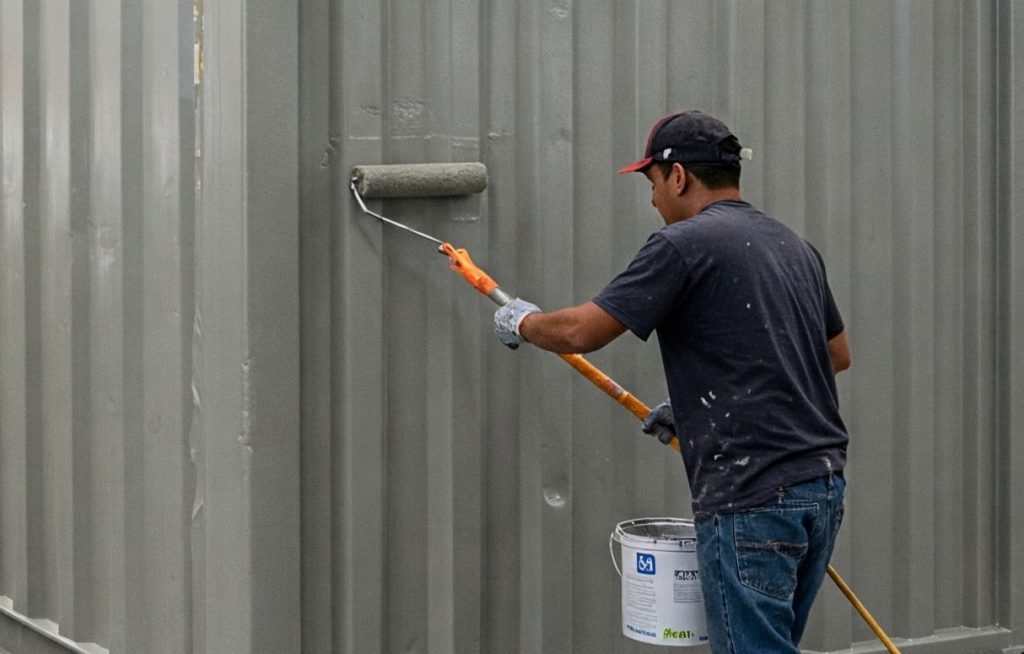
To paint a shipping container, you simply need the right tools and careful preparation to achieve a high-quality finish. Follow the steps below to paint your container:
1. Prepare Your Container for Painting
Before you begin painting, you must prepare the container surface. Proper surface preparation ensures that the paint adheres well and lasts longer.
First, you must remove all old stickers, labels, and tape from the container. Any remaining adhesive or paper residue can compromise the paint’s adhesion. Then, use sandpaper or a wire brush to smooth out the metal and remove any rust or rough patches. Pay special attention to areas that were welded or heated during the fabrication process.
After that, inspect the container for any holes, cracks, or gaps. If you find any, use a metal filler or an appropriate sealant to close them. Use masking tape and protective covering to cover any areas you do not wish to paint, such as door handles, hinges, locks, door hardware, vents, or windows.
2. Applying Primer to the Shipping Container
Primer is a specialized coating that must be applied before you begin painting shipping containers. It adheres to the metal and protects it against rust by creating a base that allows the topcoat to bond more effectively and last longer.
Apply metal primer to bare steel and welded areas. Be sure to select a primer that offers excellent resistance to rust and corrosion.
After priming the bare areas, apply primer to the entire container. Ensure the coating is even and smooth. Epoxy primers or specialized protective primers (such as those designed for shipping containers) are ideal choices, as they provide comprehensive protection for the container’s structure.
3. Painting the Container
Now it is time to paint the container. Using the right paint allows you to add color, protect the metal, and increase the container’s durability. Here is how to paint the container:
- Use a sprayer for a smooth finish: A paint sprayer can be used to coat the container evenly, resulting in a smooth, clean finish. This method is also faster and yields better results than using a brush or roller.
- Paint selection: For new containers, you may use different types of paint for different sections. A specialized protective coating is best for the underside, which comes into contact with the ground. For the exterior, use a protective coating designed to shield the container from sunlight and UV-related damage. If you are about to refresh an existing container, an S01TC-type coating is an excellent choice. This paint is affordable and easy to use; it features a single-component, two-in-one formula that makes it very simple to handle.
- Pay attention to temperature and humidity: The paint performs best in dry conditions with moderate temperatures. Therefore, you should avoid painting in extremely hot, cold, or humid weather. The ideal conditions for painting are temperatures between 50°F and 85°F with low humidity.
- Painting the interior of a shipping container: You can use epoxy on the inside of a shipping container for extra protection. Interior paint shields the metal from moisture and rust, while also making the container easier to clean. If you frequently use your container in a humid environment, you can apply an additional waterproof coating.
- Painting a shipping container with a roller: You can use a roller to paint the flat surfaces of the container, as rollers are easy to handle and provide a smooth, even finish. Be sure to apply thin coats and allow each layer to dry completely before adding the next. If you prefer a faster process, you can use a sprayer without any issues.
- Allow for drying time: Once painted, let the container dry thoroughly. For instance, wait at least 48 hours before touching or moving it. Furthermore, avoid cleaning the container with a high-pressure water spray for approximately 30 days.
How to Paint a Rusted Shipping Container
First, remove all traces of rust, ensuring that none remains. Allow the surface to dry completely. Next, apply a rust-inhibiting primer to the cleaned metal. Once the primer has dried, apply a weather-resistant topcoat to the container.
Conclusion
Painting shipping containers will allow you to beautify your units and make them more durable. However, things will be easier if you prepare and apply the painting equipment correctly.
To paint one, you can buy a used or new shipping container from Tradecorp. With more than 30 years in the industry, Tradecorp will provide you with the most durable shipping container for your home. Order today via our quote form, and we will get back to you ASAP!