
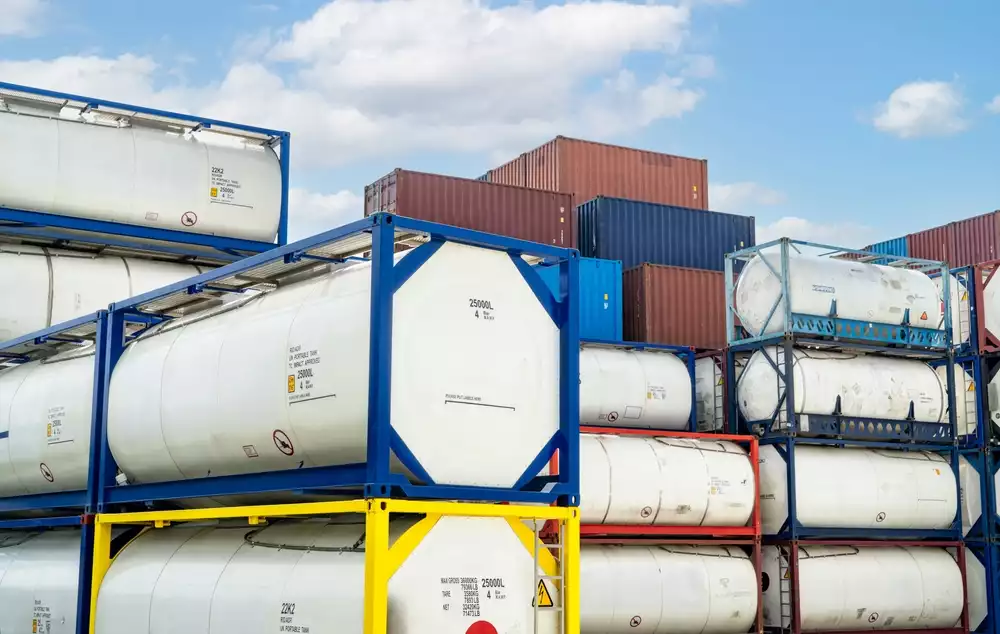
TL;DR: Wondering what is an ISO tank? It’s a standardized, stainless-steel vessel in a 20’ frame engineered to safely transport liquids and gases across sea, rail, and road. This guide explains types (T11/T75), key use cases, and why ISO tanks beat drums and IBCs for quality, cost, and sustainability.
- T11 ISO tank container: workhorse for liquid bulk chemical transportation and many non-hazardous products.
- T75 ISO tank container: cryogenic service for liquefied natural gas (LNG) and industrial gases.
- Food-grade options for bulk liquid food-grade transportation with rigorous cleaning.
- Built to ISO standard with relief valves, insulation/heating, and documented inspections.
- Fewer transfers = lower contamination risk, better economics, and global intermodal compatibility.
If you’ve ever wondered what is an ISO tank and why you see so many of them on ships, railcars, and trucks, here’s the short answer: it’s a standardized, stainless-steel pressure vessel inside a protective frame that’s purpose-built to safely transport liquids and gases around the world. Because ISO tanks conform to a unified ISO standard, they integrate seamlessly with global freight systems—making them the go-to solution for liquid transport across sea, rail, and road.
Below, we break down how ISO tanks work, the main types (including the T11 ISO tank container and T75 ISO tank container), and common applications ranging from liquid bulk chemical transportation to bulk liquid food-grade transportation and LNG transportation.
ISO Tanks 101: What They Are and How They Work
An ISO tank is a cylindrical, stainless-steel vessel mounted within a 20-foot frame that meets International Organization for Standardization (ISO) dimensional and safety criteria. The frame allows the tank to be handled like a standard container—stacked, craned, and secured—while the vessel itself is engineered for the product’s temperature, pressure, and compatibility requirements.
Key attributes:
- ISO standard dimensions (typically a 20’ footprint) for intermodal compatibility.
- A corrosion-resistant, food/chemical-grade stainless-steel shell with optional linings.
- Safety systems such as relief valves, bottom/top discharge arrangements, and insulation or heating as needed.
- Traceable design approvals and periodic inspections to ensure continued integrity.
Because they’re built for multi-modal moves, ISO tanks reduce handling steps. Fewer transfers mean less contamination risk, lower loss, and better product quality at destination—exactly what shippers want when they safely transport sensitive cargo.
What Can an ISO Tank Carry?
A better question might be: what can’t it carry? ISO tanks are used for hazardous and non hazardous liquids and gases, including:
- Liquid bulk chemical transportation: solvents, alcohols, acids/alkalis (with the right lining), additives, detergents, polymers, and intermediates.
- Bulk liquid food-grade transportation: edible oils, juices, wine, liquid sugars, dairy bases, and syrups (in food-spec tanks).
- Temperature-controlled cargo: products that require heating (steam/electric) or insulation to maintain viscosity or prevent freezing.
- Gases and cryogenic products: LPG, ammonia, carbon dioxide, nitrogen, oxygen, and methane.
Specialized models and fittings ensure compatibility with each product’s chemical properties and temperature/pressure range.
T-Codes in Plain English: T11 vs. T75
ISO tanks are grouped by “T-codes,” which reflect design pressures, testing thresholds, and allowable cargoes.
T11 ISO Tank Container
The T11 ISO tank container is the global workhorse for general-purpose, liquid bulk chemical transportation—often non-hazardous, but many T11s can also be configured for certain classes of hazardous materials (subject to regulations and lining choices). Typical features include:
- Nominal capacities around 24,000–26,000 liters.
- Options for steam heating, insulation, and specialized linings (e.g., for corrosives).
- Top and/or bottom discharge, depending on product handling needs.
T11s excel when you need flexible, cost-effective liquid transport with high cleanliness standards, repeatable cleaning cycles, and broad product compatibility.
T75 ISO Tank Container
The T75 ISO tank container is purpose-built for cryogenic service—ultra-low-temperature liquids gases like nitrogen, oxygen, argon, and methane. With multi-layer insulation and a vacuum jacket, T75s are the standard for LNG transportation. Use cases include:
- Liquefied natural gas LNG fuel supply to remote users or peaking operations.
- Medical and industrial gases for hospitals, labs, and fabrication plants.
- Backup and mobile storage where fixed tanks aren’t economical.
If your operation needs to move cryogenics safely and efficiently, T75s deliver the right envelope for holding time, pressure management, and regulatory compliance.
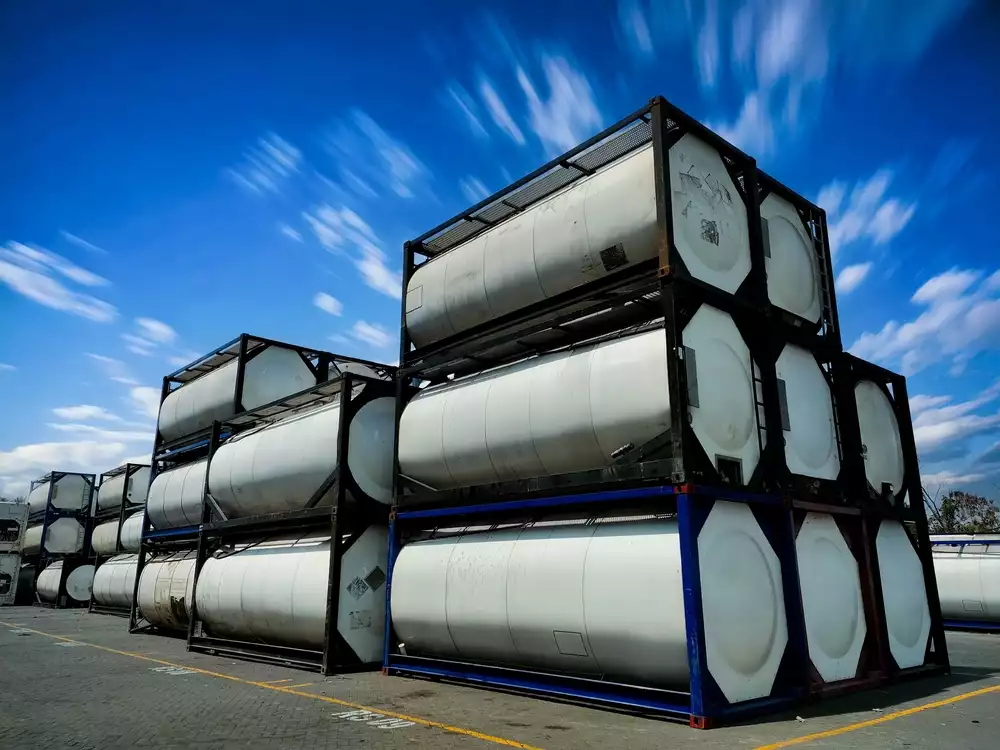
Why Choose ISO Tanks Over Drums or IBCs?
Shippers often upgrade to ISO tanks when they outgrow drums (55-gal) or IBCs (~275–330 gal). Here’s why:
1. Quality & Safety
One sealed vessel means fewer decantings and less exposure—key when handling hazardous materials or high-purity food products. Tanks are engineered to safely transport cargo under pressure/temperature and comply with the relevant ISO standard and modal codes.
2. Cost Efficiency
Higher payload per unit cuts packaging waste and handling costs. Tanks often reduce per-gallon freight and cleaning/return cycles compared to thousands of small containers.
3. Sustainability
Stainless tanks are reusable for years. Fewer single-use plastics, less landfill, and fewer spills from handling—sustainability teams love the switch.
4. Speed & Intermodality
ISO tanks transfer seamlessly between ship, rail, and truck with no product transfer. That’s time saved and quality preserved.
Core Use Cases by Industry
Chemicals & Petrochemicals
From glycols and plasticizers to surfactants and resins, the T11 ISO tank container streamlines regional and international liquid bulk chemical transportation. For pressure products (e.g., LPG), specialized gas tanks are used, while corrosives may require lined tanks and upgraded valves.
Food & Beverage
In bulk liquid food-grade transportation, ISO tanks keep product integrity high—think wine, edible oils, juice concentrates, and sweeteners. Food-spec tanks, rigorous cleaning protocols, and dedicated fittings prevent cross-contamination.
Energy & Industrial Gases
For lng transportation, the T75 ISO tank container is the gold standard. Companies use T75s to position liquefied natural gas LNG where pipelines don’t reach, support micro-grids, and balance seasonal demand. The same tech underpins liquid nitrogen, oxygen, and argon logistics for healthcare and manufacturing.
Pharmaceuticals & Life Sciences
Temperature control, cleanliness, and traceability are paramount. Depending on the product (API intermediates, solvents, excipients), shippers choose insulated/heated T11s, specialized linings, and documented cleaning regimes.
Safety, Compliance, and Cleaning
ISO tanks operate under international rules (IMDG for ocean, ADR/RID for road/rail in many regions, plus domestic regulations). Expect:
- Periodic inspections and pressure testing to keep vessels in code.
- Relief devices and product-appropriate fittings to manage risk.
- Cleaning protocols: tanks are washed, inspected, and certified between loads. Food-grade and pharma loads follow elevated standards, often with dedicated or restricted-use fleets.
For hazardous and non-hazardous cargoes alike, the guiding principles are compatibility, containment, and documentation.
Operational Considerations: Making ISO Tanks Work for You
- Product Compatibility: Confirm material pairing (stainless grade, linings, gasket materials).
- Temperature Strategy: Use insulation and steam/electric heating for viscous cargoes; use cryogenic insulation for T75s.
- Loading/Unloading: Decide on top vs. bottom load/discharge based on safety, viscosity, and site equipment. Plan venting and grounding as required.
- Cleaning & Rotation: Build a cleaning matrix and preferred depots to tighten turn times and maintain product integrity.
- Fleet Mix: Balance owned, leased, and spot rentals to match demand. T11s suit broad liquids; T75s cover cryogenic needs including lng transportation.
- Regulatory Docs: Maintain MSDS/SDS, tank test certificates, and route-specific permits, especially for hazardous materials.
FAQs
Is an ISO tank only for chemicals?
No. They’re widely used for both bulk liquid food-grade transportation and chemicals. Dedicated food-spec tanks and strict cleaning address cross-contamination concerns.
Can ISO tanks handle both hazardous and non-hazardous products?
Yes—hazardous and non hazardous cargoes are common. The key is choosing the right T-code, materials, and safety features for each product.
When do I need a T75 vs. a T11?
Choose T11 ISO tank container for most liquid chemicals and many non-hazardous liquids. Choose T75 ISO tank container for cryogenic liquids gases, including liquefied natural gas LNG.
Are ISO tanks really more economical than drums?
For steady volumes, yes. ISO tanks reduce packaging cost, handling labor, and damage risk—often lowering total landed cost.
The Bottom Line
ISO tanks exist to safely transport liquids and gases at global scale—reliably, efficiently, and in compliance with the ISO standard and modal regulations. Whether you’re moving solvents across a continent, staging wine for export, or building a flexible LNG transportation network with liquefied natural gas LNG, there’s an ISO tank configuration that fits. For versatile chemicals, a T11 ISO tank container is your everyday workhorse; for cryogenics, a T75 ISO tank container sets the standard. Choose the right tank, align cleaning and compliance, and your liquid transport program will run smoother, safer, and more cost-effectively end-to-end.