

Have you ever heard of a Chassis trailer? A chassis is a type of shipping container trailer. It is a vital part of the delivery and transportation system, providing a standard way to transport containers between trucks.
A chassis trailer can carry your shipping containers over long distances between ports, distribution centers, 3PL warehouses, and terminals.
The price of a chassis trailer can be different under some circumstances. To know the 10 factors influencing them, read this article!
What is a Chassis Trailer?
Container chassis are an essential part of the global supply chain. They act as the basic platform that supports the container. Theywork by increasing efficiency and reducing waste by being made of lightweight materials that are durable enough to hold heavy containers.
With a chassis, you can move containers without having to unload them first. Their primary function is to provide a stable and secure platform for transporting containers over long distances by road. These chassis are integral to the smooth flow of goods in the global supply chain.
Container chassis have several key features to make them suitable for carrying and handling containers, they are:
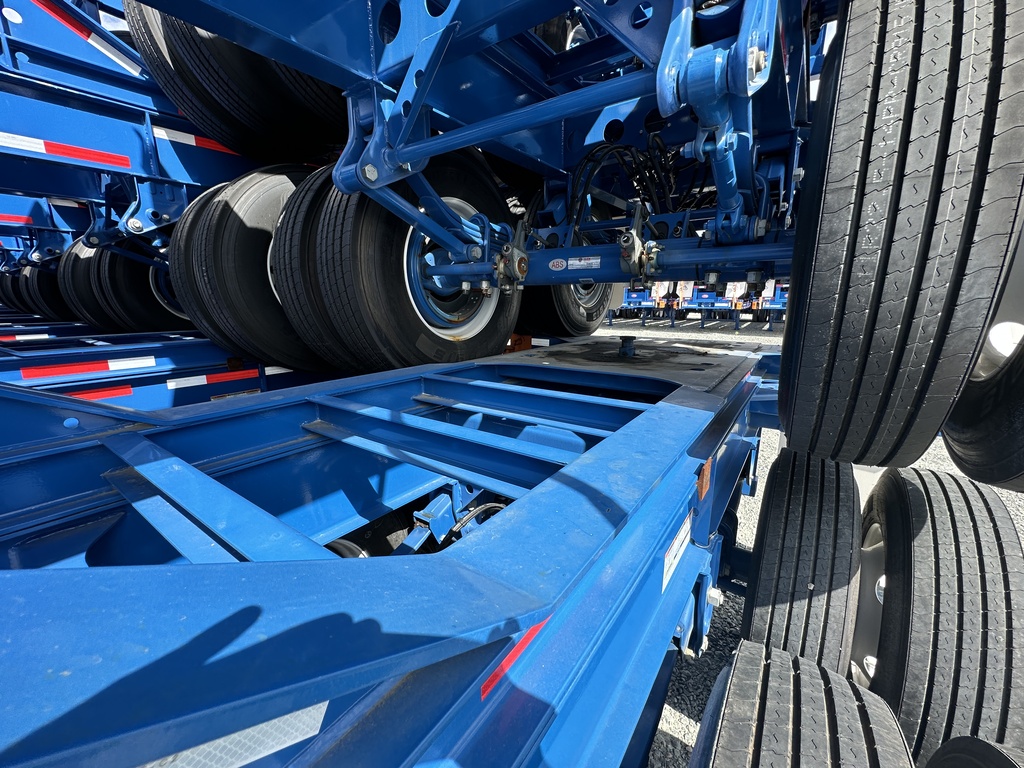
- Twist Lock: To attach containers, ensuring safe and secure transportation. Twist locks are commonly used and allow for quick attachment and detachment of containers.
- Steel Frame Structure: Makes the chassis strong enough to support stability during transit and withstand the weight and stress of loaded containers.
- Single or Tandem Axles: Critical for supporting the weight and ensuring proper distribution of the load.
- Suspension System: The chassis has air suspension for a smoother ride. It goes well with heavier containers as it reduces wear on both the chassis and the container.
- Wheels and Tires: Container chassis have large, durable wheels to support heavy loads and handle the rigors of transport.
- Brake System: Most container chassis use Air Brakes for efficient braking when the vehicle is carrying heavy loads.
- Rear Bumper or End Frame: The bumper can reduce the risk of damage in case of collisions. Meanwhile, the end frame protects the container’s rear end during loading and unloading. It also provides a mounting point for the braking system.
- Lighting and Reflectors: Container chassis has headlights, brake lights, reflectors, and turn signals to ensure visibility and safety during transport.
- Weight Distribution and Load Support: Container chassis can evenly distribute the weight of the container across the axles to ensure proper balance and reduce the risk of tipping, thanks to its strengthened rails and supports.
- Adjustable Components: Some chassis are designed to be extendable for larger containers, providing the flexibility to handle containers longer than the standard 40’.
Factors Influencing the Price of a Chassis Trailer
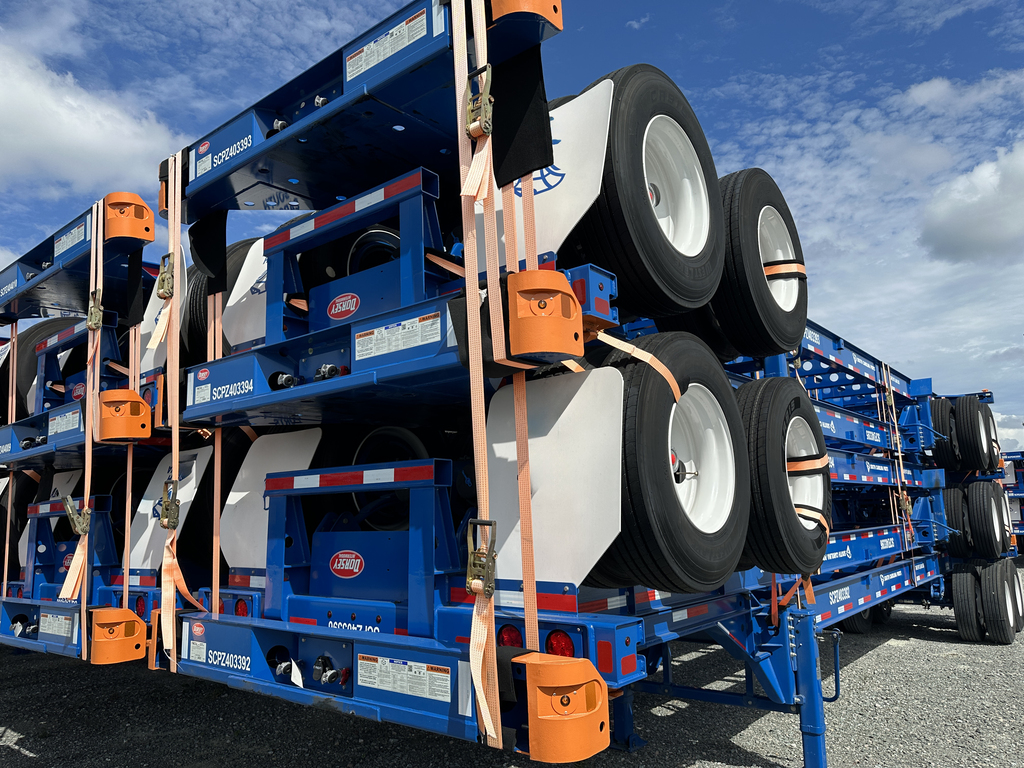
The price of a chassis trailer varies widely depending on several technical, regulatory, and market-related factors, such as:
1. Trailer Type and Configuration
Different chassis designs, like a standard chassis, a telescopic chassis, a gooseneck, and a tri-axle, serve different purposes. This will affect their pricing. More versatile or specialized configurations typically cost more due to the added engineering and components required.
2. Materials and Build Quality
A chassis trailer that is made of higher-grade steel will be more expensive, as it is more durable. The price will increase further if you add corrosion protection, such as galvanized frames or advanced coatings, to extend the service life.
3. Axles, Suspension, and Running Gear
The number of axles, suspension type, and brand or rating of axles, brakes, hubs, and tires will also influence the price of a chassis trailer. They are called higher load ratings and premium components that will significantly increase the base price.
4. Regulatory Compliance
Chassis trailers built for multiple markets are usually more expensive. Meeting regional and international standards adds cost, such as DOT / FMVSS compliance, ISO container compatibility, and local road weight & safety regulations.
5. New vs. Used Condition
New trailers command higher prices due to warranties, compliance, and zero wear. Meanwhile, used trailers vary widely in price depending on age, maintenance history, and structural condition. That is why new trailers are more expensive than the used ones.
6. Customization and Optional Features
Optional add-ons can raise the price notably. This includes sliding tandem axles, lift axles, LED lighting packages, anti-lock braking systems, and GPS or telematics integration.
7. Manufacturer and Brand Reputation
Well-established manufacturers often charge more due to proven reliability, better resale value, warranty, and after-sales support. Lesser-known brands may be cheaper but can carry higher long-term risk.
8. Market Conditions and Supply Chain Factors
The prices of chassis trailers often rise during periods of high container traffic or global trade disruptions. Other than that, the supply chain factors like raw material prices, labor costs, freight & logistics expenses, and port congestion also have impact on this.
9. Geographic Location
Costs vary by region due to import/export duties, local manufacturing availability, and transportation distance from the factory to the buyer.
10. Total Cost of Ownership
A lower upfront price doesn’t always mean better value. This is because buyers often consider maintenance & repair costs, parts availability, fuel efficiency (weight-related), and resale value.
Chassis Trailer Recommended Unit
40’ Container Chassis
A standard 40’ chassis is one of the most widely used types in global logistics. It can carry up to 67,200 lbs, enough for a fully loaded 40-foot container, though it can sometimes also accommodate 45-foot containers with an extendable or adjustable frame.
A 40’ chassis is typically 40’ (12.2 meters) long, 8 feet (2.44 meters) wide, and 5’ (1.5 meters) high from the ground to the top of the chassis, which aligns with the width and length of a standard 40’ container.
The chassis is engineered to distribute the container’s weight evenly across its axles, helping to avoid overloading any one part of the system. Proper load distribution is critical for maintaining stability and safety during transport.
Typically, it has either two axles (standard) or occasionally three axles for greater weight distribution and load-bearing capacity. Most modern chassis have air suspension systems, which help reduce wear on both the chassis and the container. This is particularly beneficial when transporting heavy loads over long distances.
Conclusion
A combination of design complexity, materials, compliance requirements, component quality, and market forces molds the price of a chassis trailer. Evaluating both upfront cost and long-term operating expenses is essential for making a cost-effective purchasing decision.
The primary advantage of using Container Chassis over other transportation is that it allows drivers to move containers without having to unload them first.
Transport containers over long distances between ports, distribution centers, 3PL warehouses, and terminals with our brand-new 40’ Container Chassis. Our experienced staff is ready to assist you in arranging the shipping of your container chassis to your specified location. Fill out our quote form to buy or rent from us!