
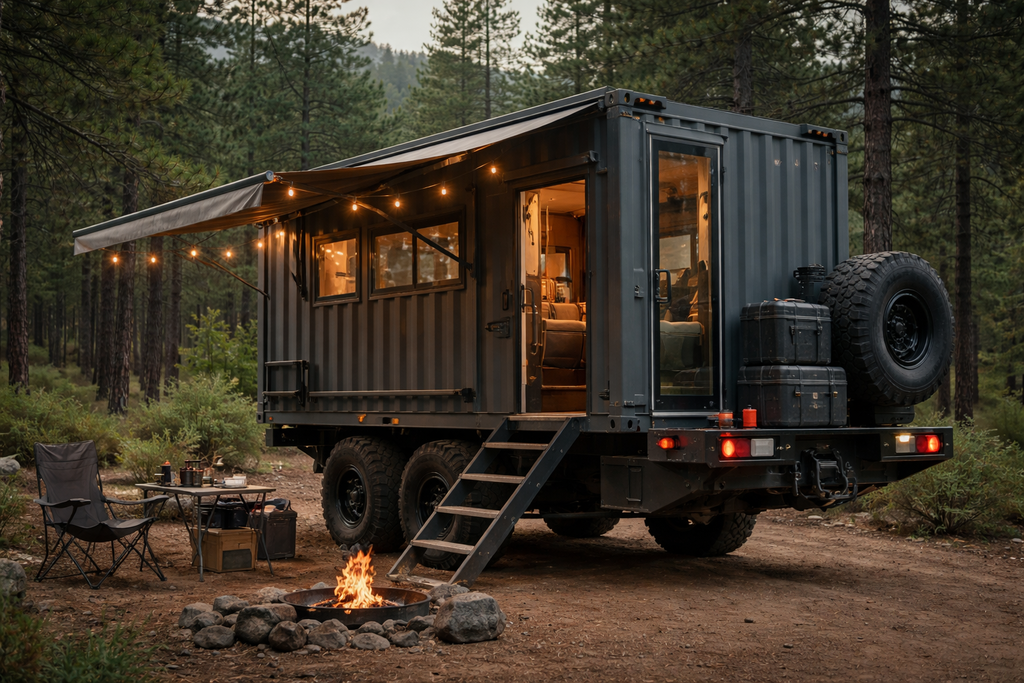
A container van is a solution for a bigger campervan space to transport more people during your travel journey. Vacationing in a container van has become a part of the modern lifestyle. Many travelers choose this method because of the flexibility and freedom it offers.
With a container van, you can choose your destination at any time without having to book a hotel or schedule transportation. You can camp on the beach, mountains, or lakes indefinitely.
Although there is an initial cost for renting or modifying the vehicle, daily expenses are significantly lower because there is no need for accommodation.
Read this article until the end to know how to build a container van, including several benefits of using it!
What is a Campervan?
A campervan is a vehicle that has been converted into a small living space. With a campervan, you can travel without having to stay at an inn, as you can sleep in it. It combines transportation and basic accommodation in one.
It is popular for road trips, van life, and camping without the need for tents. In short, a campervan is like a small home on wheels, designed for freedom and mobility.
Typically, a campervan includes sleeping space, a basic kitchen setup, storage for clothes & gear, electric power, a toilet, and a shower.
Turning a shipping container into a campervan is difficult. It is because a standard shipping container is heavy and not designed to move on its own wheels.
However, it is possible. To turn one into a campervan, you would need a heavy-duty truck chassis, structural cutting & reinforcement, suspension upgrades, and engineering approval.
Turning a shipping container into a camper makes the most sense if you want a rugged, stationary-mobile hybrid. It is also great if you plan to mount it on a truck or trailer, and you value strength and security over fuel efficiency.
Benefits of Turning a Shipping Container into a Campervan
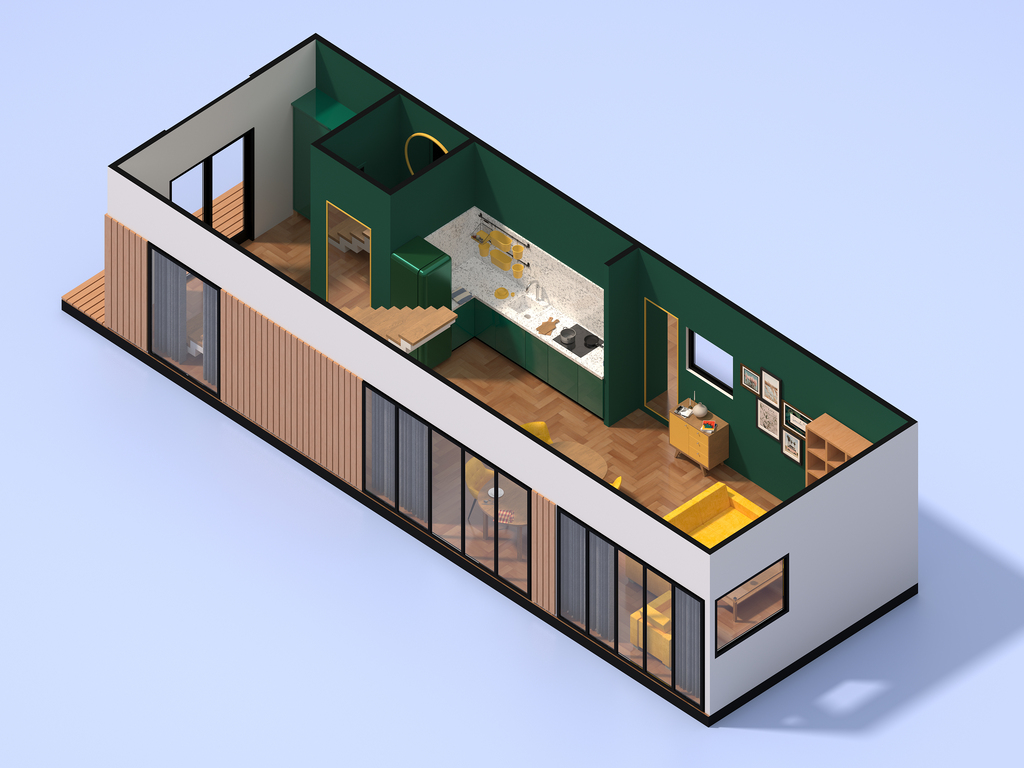
Here are the key benefits of turning a shipping container into a campervan:
1. Exceptional Strength & Durability
Shipping containers are built to carry heavy loads, withstand harsh weather, and resist corrosion. This makes them very robust compared to typical van bodies, which is great for rough environments or long-term use.
2. High Security
A shipping container’s thick steel walls and lockable cargo doors offer excellent protection against theft, especially for tools, bikes, or long-term travel gear.
3. Modular, Boxy Design
With the straight walls, zero curves (like in vans), and simple installation of furniture, insulation, & panels, you will easily do the layout planning. This is ideal for DIY builders who prefer clean geometry.
4. Reuse & Sustainability
By converting a shipping container into a campervan, you are helping to reduce waste compared to new vehicle builds. This means you are repurposing existing industrial materials.
Many people choose container builds for eco-conscious reasons.
5. Multi-Use Potential
A container camper can function as a mobile cabin, a camper trailer, and a detachable living unit. This flexibility is a major advantage over fixed van conversions.
7. Low Initial Material Cost
Used containers can be relatively inexpensive to acquire, especially if you already have land or a truck, and you’re doing most of the work yourself, as the total cost can still rise due to engineering and transport.
How to Turn a Shipping Container into a Campervan
Turning a shipping container into a campervan is a major DIY/engineering project, but it can be done if you approach it the right way. Follow this step:
Decide the Build Type
A shipping container is bigger than a usual van. Therefore, you need to choose how it will move before cutting anything.
The most realistic type is a container on a truck. For this type, you need to mount the container on a flatbed or rigid truck. Then, with an engineering approval, it will become a truck camper/expedition vehicle.
However, if you do not like that type, you can put the container on a trailer by mounting it to a heavy-duty trailer towed by a powerful vehicle. Mounting a full container on a normal van chassis is not recommended.
Choose the Right Container
For a campervan, a 20’ container is the most common and manageable size. For less rust, choose the “One-trip” containers. However, if you would like to go with a lower container grade, please inspect for rust, warped doors, and floor contamination.
Structural Planning & Engineering
The structural planning step separates success from failure. During this step, you will need to plan the weight distribution, reinforce areas where walls are cut, and add a subframe to mount the container safely.
One thing to remember, once you cut windows or doors, the container loses structural strength unless reinforced.
Cut Openings (Doors, Windows, Vents)
After the structural planning, cut for doors, windows, skylights, service hatches, and vent openings. You can use an angle grinder or a plasma cutter. Then, weld steel frames around openings immediately
Rust Protection & Exterior Treatment
This step is essential for longevity. For rust protection and exterior treatment, grind and treat all cut edges. Then, apply rust converter, primer, and weather-resistant paint or coating.
Insulation & Climate Control
Steel containers get extremely hot and cold. Therefore, you need to insulate your container. Without proper insulation, the camper will be uncomfortable year-round. The recommended insulation types are:
- Closed-cell spray foam (best)
- Rigid foam boards + vapor barrier
- Thermal breaks on steel ribs
Interior Framing & Layout
A container has straight walls that will make the interior framing and layout step easier than in vans.
Frame the container campervan interior using lightweight steel studs or timber, a floor leveling system, and ceiling battens. Then, plan zones for bed, kitchen, seating, storage, and bathroom.
Electrical System
Typical electrical setup inside the container campervan includes a house battery bank, an inverter, solar panels, a shore power hookup, and LED lighting. In this step, you need to run all wiring before closing walls.
Plumbing (Optional)
Plumbing system inside a container campervan will include a fresh water tank, a grey water tank, a sink, a shower, and a composting or cassette toilet. For more optimal operation, use flexible piping to handle vibration.
Interior Finishing
The interior finishing of a container campervan includes wall panels, flooring, cabinets, furniture, and appliances. To control the total mass, use lightweight materials.
Mounting to Vehicle or Trailer
This step is crucial and must be done properly, as Improper mounting can crack the container or the vehicle frame.
For a great result, use a steel subframe, bolt the container to the chassis, and allow for chassis flex.
Legal & Safety Compliance
For legal and safety compliance, check local rules for vehicle weight limits, roadworthiness inspections, registration category, and gas & electrical certifications. Skipping this step can make the vehicle illegal to drive.
Conclusion
A container camper is best if you want extreme durability, high security, and a truck-based or trailer-based camper.
If you want to buy a high-quality 20’ container for your campervan, you can entrust it to a trusted provider such as Tradecorp. Tradecorp is a reliable container sales, purchase, rental, and modification service company. Tradecorp provides modification and custom container services to residences by adding windows, doors, walls, and roof insulation.
Our experienced staff is ready to help you arrange the shipping of your container to your requested location. Fill out our quote form to buy or rent from us!