

A container truck is a heavy-duty truck specifically designed to transport standardized shipping containers over land. It is mainly used to move containers between seaports, inland container depots, warehouses, rail terminals, and distribution centers.
Many businesses use truck shipping due to its versatility and reach. From large cities to rural locations, trucks can deliver products practically anywhere there is a road.
Find out the good container truck specification for on-land transportation, including the recommended highways for truck shipping, here!
Container Truck Specification
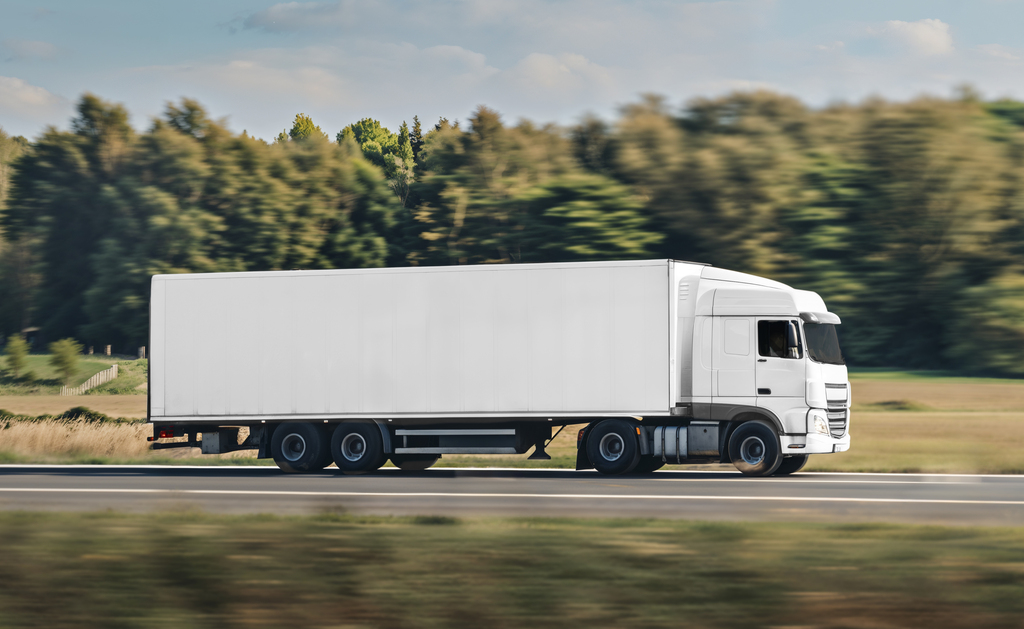
Truck Type & Configuration
Prime Mover and Semi-Trailer are the most common truck types for shipping containers. For this truck, you can use a Skeletal / Flatbed container trailer to transport your 20ft, 40ft, and 45ft ISO containers.
Engine Specifications
To transport containers smoothly during short and long distances, your truck must have these engine specifications:
- Engine Power : 350-500 HP
- Torque :1,500-2,000 Nm
- Emission Standard : Euro IV/V/VI
- Fuel Type : Diesel
- Fuel Tank Capacity : 400-800 Liters
Axle & Drivetrain
An axle is a shaft that supports the weight of the truck and cargo and holds the wheels in position. There are 3 types of axles in a truck: the front axle, the drive axle, and the lift axle.
Meanwhile, the drivetrain is the complete system that delivers power from the engine to the wheels. And, the axle is one of the drivetrain’s main component that deliver power to the wheels.
For a truck that will be used to transport a container, the suitable axle configurations are:
- 4×2: Means 2 axles and 1 driven axle, best for light to medium loads (single 20’ container)
- 6×4: Means 3 axles, 2 driven axles, best for heavy loads (40’ container or hilly terrain)
Container Trailer Specifications
Container trailer specifications are something you have to look into in detail. It is because the container trailer directly determines safety, legality, cargo integrity, and operating cost.
The most common container trailer is the skeletal trailer. Its load capacity is 30-40 tons, it has ISO Twist Locks, and a 2 or 3 axle configuration. You can use this type of trailer for a 20’ ISO container, 40’ ISO Container, and 45’ High Cube.
Suspension & Braking
Here are the important specifications of your container truck’s suspension and braking system:
- Front Suspension: Parabolic leaf spring
- Rear Suspension: Air suspension (recommended)
- Brakes: Full air brake system
- ABS/EBS: Mandatory for safety
- Retarder: Hydraulic or engine brake for downhill control
Safety Features
The safety features of a truck that will be assigned to transport a container must include:
- ABS / EBS
- Electronic Stability Control
- Lane Departure Warning (optional but recommended)
- Blind Spot Monitoring
- Reverse Camera
- Fire extinguisher system
- GPS tracking system
Chassis & Frame
For the chassis and frame, you need to use a high-tensile steel ladder frame with anti-corrosion coating and reinforced cross members for heavy container loads. This is important for coastal operations.
Is a Truck Better than a Train to Transport Containers?
Trucks can deliver door-to-door, making it highly adaptable for businesses of all sizes. They are often faster across short to medium distances, especially if the shipment is urgent. Therefore, trucking services are more widespread even during peak seasons, making them a more accessible option. Moreover, most trucking companies offer GPS tracking that allows you to follow your shipment’s progress.
However, trucks may face capacity constraints during peak seasons. This will lead to delays or increased costs, as trucking costs are calculated per mile.
On the other side, train shipping offers an equally highly efficient transportation mode. It is typically more cost-effective than trucking for long-haul shipments, especially during peak season when truck rates surge. Also, trains can carry significantly more freight than trucks, which is useful for large shipments.
However, trains run on fixed schedules and routes, which can make them less adaptable for last-minute changes or door-to-door delivery. They are also generally slower than trucks, which can harm time-sensitive shipments.
Recommended Highways for Truck Shipping
Knowing which highway has the best access for freight operations can maximize efficiency during peak season. Here are some of the most recommended highways for truck shipping:
| Highway | Route | Notable Cities Along the Way | Best Use |
| Interstate 80 (I-80) | From San Francisco, CA, to Teaneck, NJ | Sacramento, Chicago, Cleveland | Cross-country shipments, major hubs |
| Interstate 10 (I-10) | From Santa Monica, CA, to Jacksonville, FL | Los Angeles, Houston, New Orleans | Coast-to-coast, southern regions |
| Interstate 95 (I-95) | From Miami, FL, to Houlton, ME | Miami, Philadelphia, New York | East Coast shipments |
| Interstate 40 (I-40) | From Barstow, CA, to Wilmington, NC | Albuquerque, Memphis, Nashville | Central U.S. shipping, transcontinental options |
| Interstate 5 (I-5) | From San Diego, CA, to Blaine, WA | Los Angeles, Portland, Seattle | West Coast shipments |
These major highways provide extensive coverage and connections between key cities that can speed up deliveries during peak season.
Conclusion
Choosing a container truck to ship your goods, especially during peak seasons, eventually comes down to your business needs.
Moreover, using the best shipping container to keep them safe during freight from trusted vendors like Tradecorp is a must. With over 35 years of experience in the shipping industry, Tradecorp knows exactly the best container type for all your business projects. Fill out the quote form to find your ideal container and we’ll reply ASAP!