
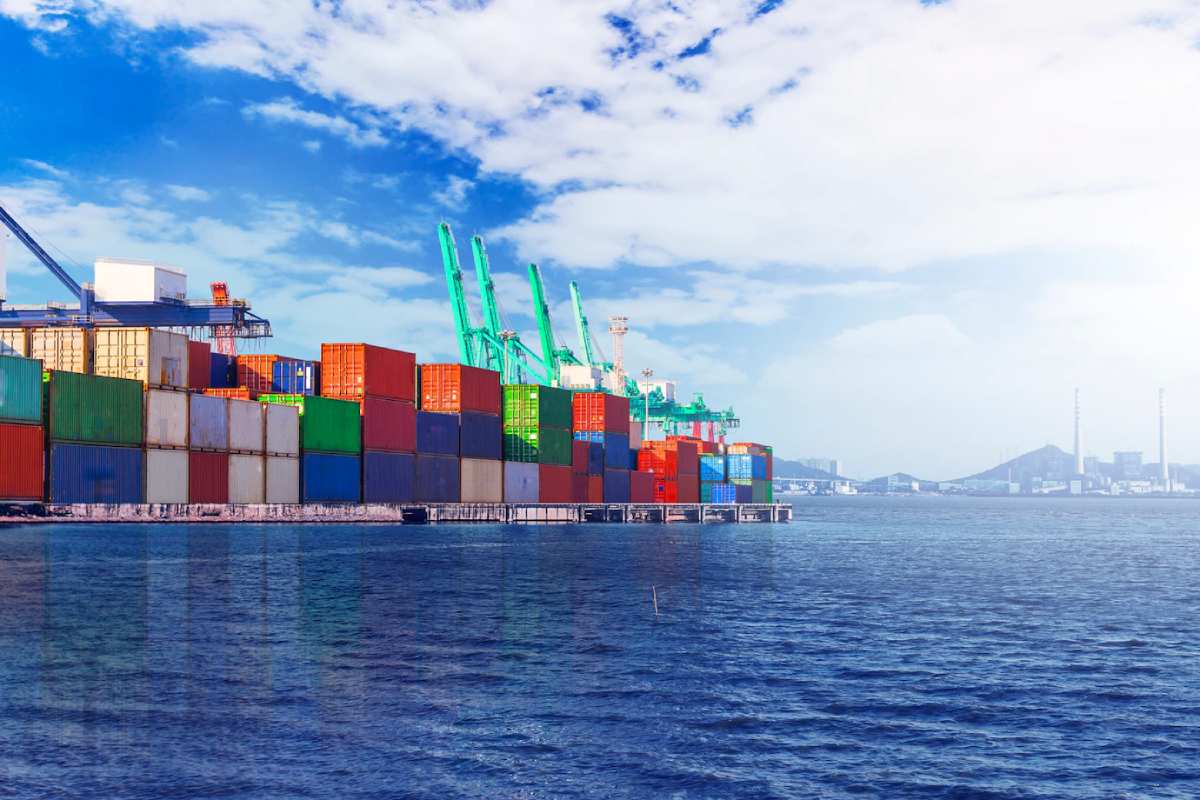
A freight shipping container is a standardized steel container designed to safely and efficiently transport cargo through various modes of transportation, from ships and trains to trucks, without the need for unloading at each transit point.
This unit is designed for global cargo shipping needs, both domestic and international, with standard dimensions that adhere to ISO (International Organization for Standardization) guidelines.
Freight containers, also known as shipping containers or sea containers, have been widely used since 1956, when Malcolm McLean introduced intermodal shipping and revolutionized the global logistics industry. Since then, more than 800 million container movements have occurred annually across ports worldwide, according to data from the World Shipping Council.
Read this article to learn all things about freight shipping container!
Shipping Container Dimensions
Shipping container sizes have been globally standardized to be compatible with all handling equipment, from port cranes and truck chassis to railways. These standards are regulated by ISO 668 and ISO 1496, allowing a single container to be used across countries without technical barriers.
The following are the most common shipping container sizes used in the international market:
Shipping Container Size Dimensions Table
| Container Type | Outer Length | Outer Width | Outer Height | Pallet Capacity |
| 10 feet | 10 feet | 8 feet | 8.6 feet | 5-6 pallets |
| 20 feet | 20 feet | 8 feet | 8.6 feet | 9-11 pallets |
| 40 feet | 40 feet | 8 feet | 8.6 feet | 20-24 pallets |
| 40 feet High Cube | 40 feet | 8 feet | 9.6 feet | 20-24 pallets |
| 45 feet High Cube | 45 feet | 8 feet | 9.6 feet | 24-26 pallets |
Explanation of Each Size
- 10’: This size is ideal for light, small-volume cargo, temporary storage needs at project sites, or short-distance domestic shipments. It is also used as a modular unit for exhibition booths or small kiosks.
- 20’ (TEU): This container unit is the industry standard and the most common unit worldwide, suitable for loading general cargo, such as machinery, consumer products, electronics, and raw materials. One TEU (Twenty-Foot Equivalent Unit) is the global unit of capacity and port measurement.
- 40’ (FEU): Twice the size of a 20’ container, this unit is an economical choice for large-volume shipments. The shipping cost per CBM is lower than using two 20-foot units.
- 40’ High Cube: The same length as a standard 40’ container, but with an exterior height of 9.6’(1’ higher than the standard container). This container unit is the best choice for transporting and shipping light, large-volume cargo, such as furniture, textiles, or e-commerce items that require more vertical space.
- 45’ High Cube. These container units are primarily used in specific trade corridors such as Europe and North America. They offer the largest capacity in the standard container category, but their availability is limited in Indonesia.
Types of Freight Containers
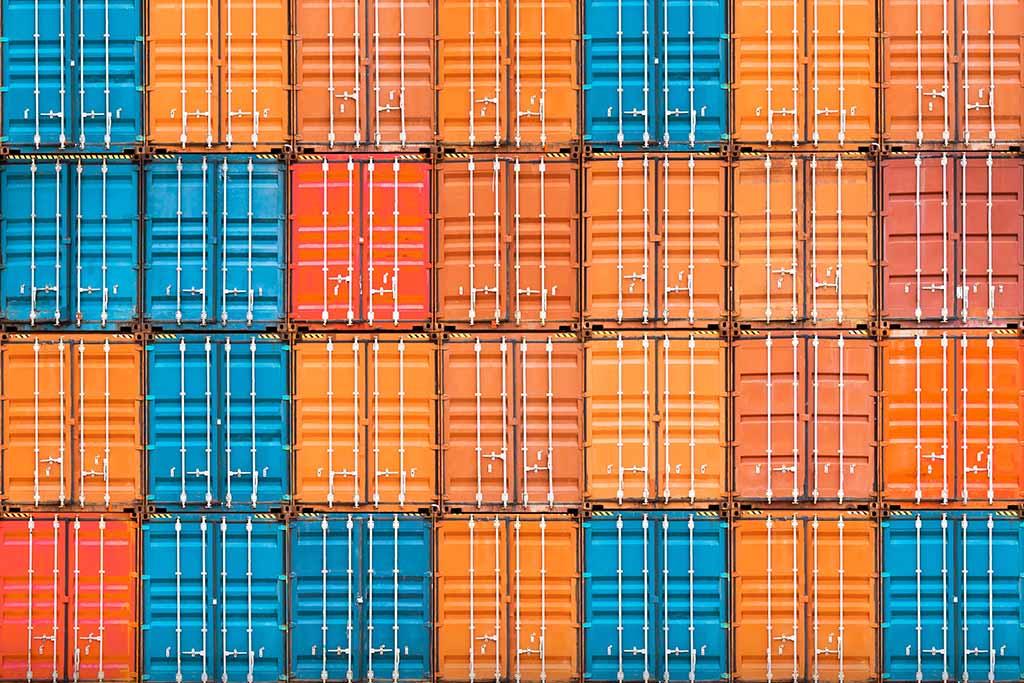
Not all cargo fits into a single standard steel box. That’s why the shipping industry has developed various types of freight containers to handle different cargo needs. Here’s a complete classification:
1. General Cargo Containers (Dry Containers)
Dry containers are the most common and widely available type on the market. General cargo containers, often called dry vans or standard containers, are fully enclosed boxes with double doors at the rear. These containers are designed for transporting general cargo, such as:
- Industrial machinery and equipment
- Consumer products and electronics
- Packaging materials
- General import and export goods
2. High Cube Containers
A variant of dry shipping containers with an exterior height of 9.6’. High cube containers provide greater vertical internal space, making them ideal for:
- Large-volume light cargo (furniture, textiles, e-commerce goods)
- Modular construction projects requiring higher ceilings
- Storage on-site with limited horizontal space
3. Open Top Containers
Open top containers don’t have a permanent roof, but instead use a removable tarpaulin. This allows for overhead loading using a crane. These units are suitable for:
- Large and tall machinery
- Steel coils
- Long construction materials
- Cargo that doesn’t fit through the rear door
4. Side-Opening Containers
One of the long sides of the container can be fully opened like a large door. These side-opening containers are useful for cargo that needs to be loaded or unloaded from the side, such as heavy vehicles or materials wider than standard doors.
5. Flat-Rack Containers
The base is a strong, flat steel platform, without side walls or a roof, with foldable end walls. This flat rack container unit is designed for large project cargo, such as:
- Heavy construction equipment (excavators, bulldozers)
- Electrical transformers
- Large-diameter pipes
- Cargo exceeding standard container dimensions (out-of-gauge cargo)
6. Half-Height Container
Half-height containers are half the height of standard containers, but have a much stronger structure. They are specifically used for dense and heavy cargo, such as:
- Coal
- Minerals and mining
- Metal scrap
7. Reefer Container (Refrigerated Container)
Reefer containers are equipped with an integrated refrigeration unit that can control temperatures from -22°F to +86°C. These containers are needed for shipping:
- Fresh agricultural products (fruit, vegetables)
- Meat, fish, and seafood
- Pharmaceutical products and vaccines
- Temperature-sensitive chemicals
8. ISO Tank Container
ISO tank containers are cylindrical tanks framed within an ISO standard frame. This unit is designed to transport large liquid and gaseous cargoes, such as:
- Liquid chemicals (acids, solvents)
- Crude palm oil (CPO)
- Fuel and lubricants
- Food liquids (milk, juice)
- High-pressure gas
The ISO tank capacity typically ranges from 14,000–26,000 liters. Its construction meets the international safety standards of IMDG (International Maritime Dangerous Goods) for dangerous cargo.
9. DNV Offshore Containers
DNV offshore containers are designed and certified to DNV 2.7-1 (Det Norske Veritas) for extreme offshore operations. These units are designed to be lifted by crane on oil rigs, offshore platforms, and work platforms, which feature:
- Reinforced lifting points
- Higher-strength steel
- International safety certification
Tradecorp provides DNV offshore containers that meet the oil and gas industry standards, including for operations in offshore oil fields.
10. Dangerous Goods Containers
Special containers for shipping dangerous goods (hazardous materials) in accordance with IMDG Code regulations. Dangerous Goods Containers feature special ventilation, a corrosion-resistant inner lining, and warning signs appropriate to the hazard class. Dangerous Goods Containers are used for:
- Explosive materials
- Compressed gases
- Flammable liquids
- Toxic and radioactive materials
Terminology in Freight Containers
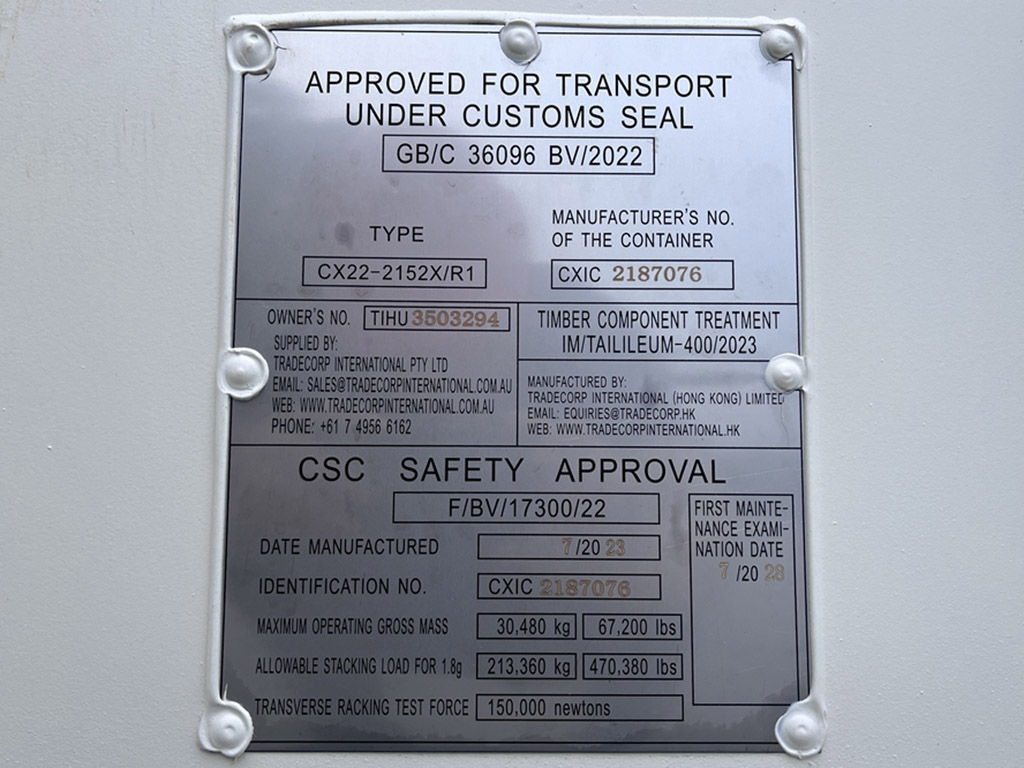
Before you book or rent a freight container, it’s important to understand the terms you’ll encounter in the world of logistics and international shipping. Below is a guide to terms you should know.
1. CBM (Cubic Meter)
CBM is a unit of volume used to measure the amount of space occupied by cargo. How to calculate it:
CBM = Length (m) × Width (m) × Height (m)
For example, a wooden crate with dimensions of 2 m × 1 m × 1 m has a volume of 2 CBM. Shipping companies use CBM to determine the chargeable volume and compare it to the weight of the cargo (weight vs. volume) before determining shipping rates.
For example: A 20-foot container has an internal capacity of around 28-33 CBM depending on the condition of the container.
2. LCL (Less than Container Load)
LCL means your cargo isn’t large enough to fill a full container, so the same container is shared with several other shippers. This terminology typically applies to cargo under 15 CBM.
How it works: A freight forwarder or consolidator collects multiple LCL shipments from various shippers, consolidates them at a Container Freight Station (CFS), and then packs them all into a single container. Each shipper receives a separate House Bill of Lading (HBL).
This method is suitable for small-to-medium-scale importers/exporters, testing new markets, or shipping with irregular volumes.
3. FCL (Full Container Load)
FCL means you rent a full container exclusively, even if it’s not full. You pay a flat rate for exclusive use of one container.
Typical capacities available:
- 20 feet: approximately 25-28 CBM
- 40 feet: approximately 55-60 CBM
This unit is suitable for large volumes, frequent shipments, and sensitive goods that don’t want to be mixed with other cargo.
4. CFS (Container Freight Station)
A CFS is a warehouse facility that serves as a consolidation and deconsolidation point for LCL cargo. In CFS, cargo from multiple shippers is packed into a single container before being shipped to the port, or conversely, unloaded for distribution to their respective recipients upon arrival.
CFS also handles temporary storage, customs clearance, and the handover of cargo between the truck and the port terminal.
5. FOB (Free On Board)
FOB is an Incoterms term that defines the point of transfer of risk and costs between the seller and the buyer in international transactions.
With FOB:
- The seller is responsible for the cargo until it is loaded onto the vessel at the agreed port of departure.
- The buyer bears all risks, freight costs, and documentation from the time the cargo is loaded onto the vessel.
- For example, “FOB Tanjung Priok” means the seller bears the costs until the cargo is loaded onto the vessel at Tanjung Priok Port, Jakarta. After that, all responsibility transfers to the buyer.
LCL vs. FCL: Which is More Profitable?
This question often arises among importers and exporters. The answer isn’t always which is better, but rather which best suits your business’s volume, cash flow, and risk profile.
When is FCL More Profitable?
- High volume (above 15–20 CBM): The fixed costs of a container are spread across more units, resulting in lower shipping costs per CBM and increased margins per unit.
- Frequent and scheduled shipments: You can better plan your inventory, reduce the risk of damage from additional handling, and avoid CFS surcharges and LCL consolidation delays.
- Sensitive or high-value cargo: FCL gives you full control over the container. Your cargo isn’t mixed with others’, reducing the risk of damage or contamination.
When is LCL More Profitable?
- Small or irregular volumes (below 10–15 CBM): You only pay for the space you actually use, not the entire container. Working capital is more efficient because you’re not tied to the cost of a full container.
- Test markets or pilot shipments: Small, more frequent shipments allow you to react quickly to changes in market demand, reduce inventory holding costs, and increase your net profit despite higher freight costs per CBM.
- Just-in-Time (JIT) operations: Ideal for businesses that practice strict inventory management and don’t want to carry excess stock.
LCL vs FCL Comparison
| Factors | LCL | FCL |
| Ideal volume | < 10-15 CBM | > 15-20 CBM |
| Cost per CBM | Higher | Lower |
| Working capital | Lower (pay per volume) | Higher (pay for the full container) |
| Transit speed | Slower (consolidation process) | Faster |
| Risk of damage | Higher (more handling) | Lower |
| Flexibility | High | Medium |
| Suitable for | MSMEs, market testing, JIT | Large volumes, regular deliveries |
Rule of Thumb:
- Under 10 CBM: LCL is almost always more economical.
- 10-15 CBM: Calculate both and compare the total costs.
- Above 15-20 CBM: FCL is usually more economical and operationally more efficient.
Conclusion
Choose Tradecorp as the trusted solution for your freight shipping container for sale or rent.
Tradecorp has an extensive stock of ready-to-ship units in various strategic locations throughout the US, from standard units to modified units, to custom-made containers ready for various uses.
We also provide modification and custom shipping container services by adding windows, doors, walls, and a roof.
Our experienced staff is ready to help you arrange the shipping of your freight container to your requested location. Fill out our quote form to buy or rent from us!