
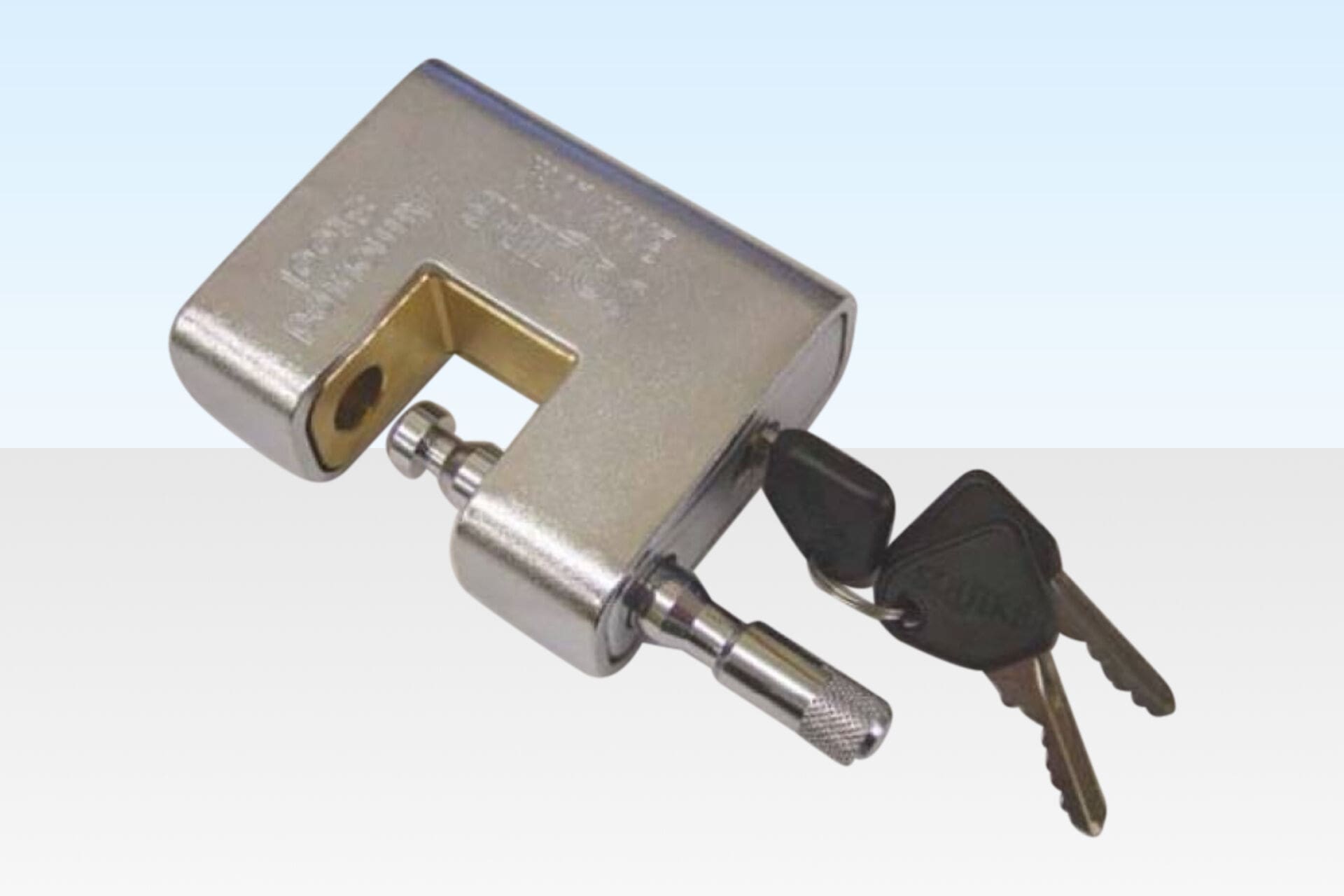
While many new containers include a lock box, used containers often lack them, necessitating the installation of a block lock.
In remote or high-crime areas where a visible deterrent is required, a block lock is often the perfect choice. For shipping containers, the real test is whether they can resist bolt cutters, grinders, drills, prying, and rust.
A block lock for a shipping container is a heavy-duty security device designed to prevent unauthorized access by physically blocking the container’s locking bars. It’s commonly used in logistics, ports, and long-term storage.
When Will A Lock Be Considered Strong & Reliable
1) Strong Material
Strong material is the first sign of a good lock. The block lock body and shackle should be made from hardened steel, boron alloy steel, or high-grade stainless steel, materials that are specifically designed to resist cutting and drilling.
Moreover, the shackle also needs to be thick, around 10-15 mm or more. Thicker means harder for bolt cutters to grip. If the lock feels light or is made from soft metal, it’s not suitable for container use.
2) Hidden/Shrouded Shackle
A hidden/shrouded shackle is one of the biggest indicators of a strong lock. A reliable container lock should hide the shackle so thieves cannot easily cut it.
This design is widely considered best practice for containers. This is because most theft attempts are physical attacks, which matters more than fancy key systems.
3) Tight Fit with the Container
Even a strong lock becomes weak if it leaves space for tools. Therefore, a reliable lock should sit flush against the lock box/hasp. Moreover, it should also leave minimal exposed metal and avoid any gaps for pry bars.
This is why purpose-built container locks are much better than regular hardware-store padlocks.
4) Weather Resistance
The weather resistance of a block lock means it is reliable and can still work after months outside. Therefore, when buying a block lock, you need to look for anti-rust coating, stainless components, sealed keys, and dust and rain protection.
5) Anti-Drill + Anti-Pick Features
Anti-drill + anti-pick features of a block lock improve reliability against tampering. Good locks often include anti-drill plates, security pins, disc-detainer cores, and ddual locking bolts.
What is a Block Lock?
A block lock is a heavy-duty security device designed specifically to secure the doors of a shipping container. It is a solid steel locking mechanism that blocks access to the container’s locking bars, the vertical rods you normally open with a handle.
Instead of locking just the handles with a padlock, a block lock covers and secures the entire locking area, making it much harder to tamper with. It usually consists of a heavy-duty steel box or shroud, an internal locking mechanism, and a tight-fitting design that leaves almost no exposed metal.
This type of lock will be needed whenever you store valuable items, hold a container on a remote job site, or use a container for long-term storage. It is essential for resisting bolt cutters and pry attacks, offering much higher protection than standard padlocks on door levers.
How It Works
Shipping container doors are secured by vertical locking bars. When closed, the two doors meet and are typically secured with a padlock through a hasp. That exposed padlock is the weak point; it can be cut with bolt cutters.
A block lock slides over these bars or handles, completely covering the locking mechanism. This makes it extremely difficult to cut, pry, or tamper with using standard tools. This will prevent bolt cutters from being used, as there’s no exposed shackle to cut.
Common types
Internal Block Lock
The internal block lock is usually installed inside the container. This makes it is invisible from the outside and offers high security but requires access to install/remove.
External Block Lock
Block lock’s external lock is usually mounted outside over the locking bars. It has a hardened steel structure that support its external use. It is easier to use and more common.
Custom-Fit / Adjustable Block Locks
The adjustable block lock is designed to fit different container types. It is adjustable width for flexibility.
Key features to look for
A defining feature of a true block lock is its completely enclosed locking point. This condition prevents bolt cutters from getting a grip, making prying and drilling much harder
Block locks with internalized locking points are significantly more resistant than standard padlocks. If you can see the shackle clearly, it’s already a weaker design.
2. Hardened steel construction
While choosing a block lock for your shipping container, the material quality is critical. Therefore, you need to look for the hardened or boron steel body. This is the definition of high-grade steel, which is specifically used to slow cutting tools like grinders and saws.
3. Tight fit over container hardware
Well-designed locks reduce access to pry tools by limiting space around the lock
A good block lock should fit snugly over the hasp and locking bars for easier twisting or forced removal. Moreover, it should also leave minimal gaps, as it can give more leverage points for crowbars.
4. Anti-pry, anti-drill, and anti-cut design
Block locks are meant to be time-consuming to defeat, not just strong. Therefore, you need to look for design features like reinforced edges, boxed structure, thick shielding plates, and drill-resistant cylinders.
5. Weather and corrosion resistance
Containers are usually outdoors, so your lock needs anti-rust treatment and stainless or treated internal components. This is because corrosion can weaken the lock or cause it to seize over time.
6. High-security locking cylinder
Even though physical attacks are more common, a weak cylinder is still a liability. Pay attention to the internal lock type of your block lock. The list includes tubular or disc-detainer cylinders, pick-resistant designs, abnd restricted or hard-to-duplicate keys.
7. Compatibility with your container
Not all locks fit all containers. A poorly matched lock reduces effectiveness. Therefore, you need to check the door bar spacing, the hasp style, and whether it’s for single-door or double-door locking points.
Conclusion
A container lock is considered strong and reliable when it can do two things consistently: resist forced entry, and keep working outdoors for years.
Tradecorp is a reliable shipping container sales, purchase, rental, and modification service company. Tradecorp provides modification and custom shipping container services by adding windows, doors, walls, and roof insulation.
Our experienced staff is ready to help you arrange the shipping of your shipping container to your requested location. Fill out our quote form to buy or rent from us!